

Book Review: The Infinity Machine
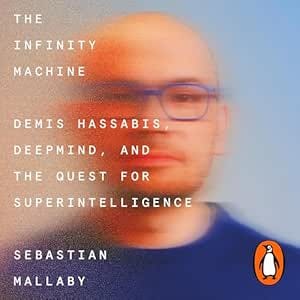
'The Infinity Machine: Demis Hassabis, DeepMind, and the Quest for Superintelligence’ by Sebastian Mallaby

Demis Hassabis is the Nobel-winning, Chess-obsessed, video-gaming, Liverpool-supporting ubergeek at the heart of Google’s AI strategy. Long before the ChatGPT era, his startup DeepMind fixated on the then outlandish mission of ‘solving intelligence’. His creations subsequently broke down ‘impossible’ barriers - from besting the human champions of Go, to solving the decades-old conundrum of protein folding. Sebastian Mallaby’s new book ‘The Infinity Machine’ explores these achievements and ponders Hassabis’s trajectory. Is he just a great British eccentric, or one of a handful of tech pioneers changing our world forever? Here are 5 ideas that stood out for me:
1. Demis Hassabis is on a mission
Sebastian Mallaby recalls his fortuitous timing with this book: ‘I negotiated deep access to Demis Hassabis and DeepMind in November 2022. A week later, ChatGPT launched, and I began my deep-dive conversations with Demis and his team just as AI moved from the fringe to the mainstream.’ This provides a window into Hassabis and his thinking, just as AI exploded.
Two personas emerge in the book. On one side we have the affable, easygoing Hassabis with an aptitude for communicating complex ideas in simple terms. The other side is the computer scientist with a world-class intellect and the proverbial brain the size of a planet.
Contemporaries can be bamboozled. Who is ‘this British computer scientist, neuroscientist, chess master guy’? An investor complained that ‘speaking with him almost made your brain break.’ Elon Musk joked about his ‘evil genius’ credentials.
He is not just smart, but also seriously driven and ‘furiously competitive.’ At University he dived into the mysteries of imagination and intelligence, an experience he recounts in visionary terms: ‘At Cambridge… I walked down King’s Parade thinking of all the incredible people who have walked down that street… Isaac Newton, Alan Turing, all my heroes. I could feel them in the bones of the stone… they were almost calling out to me.’
By the formation of his AI startup DeepMind (with Shane Legg and Mustafa Suleyman), he had crystallised his life’s goal into one mission: ‘Solve intelligence, and then use that to solve everything else.’ Or to put it differently - develop Artificial General Intelligence so that all the enigmas of science can be unlocked. Not many people were talking in these terms in 2010.
2. Games are a unique arena for shaping intelligence
Running in tandem with this ‘missionary voltage’ has been Hassabis’ love of games. He was a Chess Master by 13. He coded his Amiga home computer to play the board game Othello. He programmed the bestselling video game ‘Theme Park,’ populated by crowds with rudimentary artificial intelligence.
Then DeepMind’s first big breakthrough came through using Atari games like Space Invaders and Breakout as the proving grounds for its experiments in Reinforcement Learning. Most famously in 2016 DeepMind tackled the notoriously complex board game ‘Go’. The AlphaGo system took on elite player Lee Sedol. At move 37 of game 2, AlphaGo made a freakish play on the board that defied all human logic. Unprecedented, otherworldly but brilliant. Lee was crushed by the end of the series.
Not for the first time, games found themselves at the heart of the story of AI. Think IBM Deep Blue versus Garry Kasparov in 1997, or the pivotal role of gaming chips for Nvidia and Jensen Huang (review here). But there is something particularly Hassabian about how games can combine competition and intelligence.
3. DeepMind brought together British ideas and American power
In the early days of DeepMind there was a sense that ideas came first, and business second. But for Hassabis the urgency of his goals pushed him to find a partner. Without external backing the route to superintelligence would be slower and riskier. Despite the mutual bafflement of a science-focused Hassabis team pitted against red-blooded potential investors, a deal was struck and Google acquired DeepMind in 2014.
Some in the UK might regret the sale of a unique strategic business for a mere $500m. In truth it was part of a long stream of British companies turning to global and US investors in exchange for capital and expertise, such as SoftBank’s acquisition of ARM, and HP’s acquisition of Autonomy. (The latter provides a cautionary tale. Autonomy’s CEO Mike Lynch was a Hassabis prototype - a Cambridge-educated, maths genius, coding guru, whose star fell to earth after acquisition - now covered in an excellent new biography by Katie Prescott).
There were conditions to the DeepMind sale, not least keeping a degree of independence from Google, and remaining headquartered in London. Some investors questioned the transaction. Peter Thiel commented that investing in AI in the UK was like investing in Cambodia. ‘Meanwhile under the radar, DeepMind would hoover up the best minds in Europe.’ Hassabis recalls; ‘I wanted to show you could build a deep tech company in Britain… I guess I was rooting for the underdog.’
The book provides detail on the growing pains of managing DeepMind, working and occasionally falling out with colleagues along the way (particularly Suleyman). Throughout there is an unresolved tension between doing business, keeping true to the mission of superintelligence, and addressing concerns over AI safety.
4. DeepMind breakthroughs in reinforcement learning were a milestone in autonomous machine intelligence
DeepMind’s successes continued in the months and years after AlphaGo’s victory. Initially these were based on pushing Reinforcement Learning (RL) harder than ever before. With Atari and AlphaGo, DeepMind showed that by enabling a system to play independently, it could learn by observing which moves generated the best results.
This was pushed further still when Hassabis’s long-standing collaborator David Silver led the development of an improved system that taught itself with zero human guidance, eliminating the need for any historical human games data. The result was ‘a new and beautiful intelligence, a shockingly powerful AlphaGo Zero. By unshackling itself from human wisdom, the model had discovered strategies unknown to human players…AI stood in judgement over centuries of human wisdom, vindicating some verdicts and tossing out others.’
In the competitive race of AI development, not everyone agreed with the significance of RL. Yann LeCun dismissed it as the cherry on the much more important deep learning cake. In practice all leading labs including DeepMind had eclectic strategies, experimenting with and blending multiple technologies.
Take for example, AlphaFold. Arguably Hassabis’ crowning achievement to date, it relied on unsupervised learning and vast research datasets. With this and other science-focused applications DeepMind proved it was not a one trick pony. It would soon need to learn a load of new tricks.
5. As an LLM latecomer, Google DeepMind has re-emerged as frontier lab front-runner
In November 2022 the world was turned upside down by the release of OpenAI’s GPT-3.5 and the wider emergence of Large Language Models. A parallel offshoot of neural networks, LLMs applied supervised learning techniques and transformer architecture to text rather than gaming. The significance was not lost on Hassabis, as DeepMind’s market position quickly deteriorated: ‘This is wartime… OpenAI and Microsoft have literally parked their tanks on the lawn.’
It seemed like Google and Hassabis had missed the boat. Initial responses such as Sparrow and Bard were shelved or off-target. But over time, Hassabis replaced a hesitant, ‘blue sky’ tendency with a new sense of urgency and competitiveness. Meanwhile DeepMind and Google Brain merged with Hassabis at the helm, driven forward by Google CEO Sundar Pichai. Hassabis reflected on a difficult transition: ‘So now DeepMind has to navigate the transition from exploration to exploitation, from science to engineering, from research to products, and it’s difficult.’
Then through 2023 and 2024 came a drumbeat of launches notably Gemini, plus progress with ‘chain-of-thought’ models. Hassabis could feel momentum returning: ‘It feels good to get Gemini out there, I feel like we are on the battlefield now.’ Today Google stands with Anthropic and OpenAI as one of the few frontier leaders, and the race continues.
VERDICT: Mallaby has a number of world-class business titles under his belt (The Power Law; More Money Than God). The Infinity Machine is another. It balances readability with rich portraits of Hassabis and the other lead characters in his story. It is the definitive account of Hassabis to date, even if some readers might be hoping for Mallaby to unearth more dirt amid the procession of triumphs.
A challenge for the book is that Hassabis is a work in progress, not yet 50 at the time of writing. He continues his mission at Google, while adding other strings to his bow (for example in May 2026 raising $2b for his other company, Isomorphic Labs). His successes look set to grow, perhaps justifying further chapters to The Infinity Machine in the years to come. But the case of Autonomy’s Mike Lynch reminds us of the unpredictability of tech life. Ultimately it is too early to tell if Hassabis will be remembered as one of the great players of the AI revolution, or an innovator whose unique edge became lost in a broader but blander corporate context.
In the meantime the long march of AI continues - from winter, through neural networks, reinforcement learning, LLMs and agentic to who knows where. And all the while Demis Hassabis will be somewhere, playing the game to win.
AIBR Radar: Ideas for digging deeper
More on Demis Hassabis
BOOK: Supremacy: AI, ChatGPT, and the Race That Will Change the World, Parmy Olson (2024) - Financial Times Business Book of the Year. Hassabis and Sam Altman duel to win the race to superintelligence.
AUDIO - Desert Island Discs (May 2017) - BBC interview with Demis Hassabis.
Books that shaped Hassabis
BOOK - Gödel, Escher, Bach: An Eternal Golden Braid, Douglas R. Hofstadter (1979) - Pulitzer Prize-winning mash up on music, maths, philosophy and much more. Given to Hassabis by the boss of Bullfrog in his early game developer days.
BOOK - Ender’s Game, Orson Scott Card (1985) - Classic scifi story of a game-playing boy genius with the power to save the world.
More from Sebastian Mallaby
BOOK - More Money Than God: Hedge Funds and the Making of a New Elite, Sebastian Mallaby (2010)
BOOK - The Power Law: Venture Capital and the Making of the New Future, Sebastian Mallaby (2022)
A Cautionary Tale
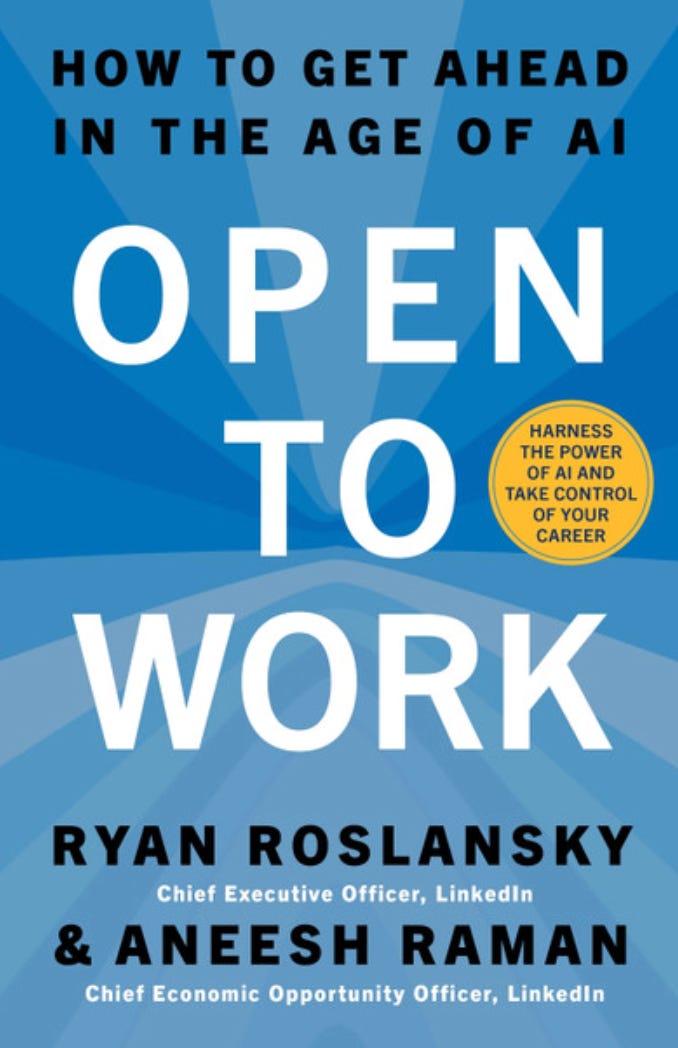
Next Review: Open to Work: How to Get Ahead in the Age of AI, Ryan Roslansky & Aneesh Raman (2026) - what can the leaders of LinkedIn tell us about steering our careers through the age of AI?
AI Book Review is on a mission to digest the latest and greatest books, ideas and media on AI, so you can focus your attention where it counts. 100% Human-written.
Subscribe for free to receive new posts and support this newsletter!
Interesting article Paul. It may be a little off-piste for you, but I’m reading journalist Katrina Manson’s book about Project Maven - the story about integrating AI into the US war machine. Interesting read too.